Montana renovation contractor · Meta Ads
Same monthly budget, six times the leads
A Montana renovation contractor was spending about $1,370 a month on Meta ads and getting four consultation requests. Backpack rebuilt the campaign and, on roughly the same monthly spend, it now produces about 23 consultation requests a month at $56 each. Cost per lead fell 84%, from $342.65 to $55.81.
Nothing about the budget changed. What changed was the creative, where the click went, and what the campaign was told to optimize for.
The client
A residential renovation contractor in a mid-sized Montana city, selling fixed-price bathroom and kitchen remodels. Jobs are high value and the sales cycle runs through a design consultation, so the only number that matters at the top of the funnel is how many consultation requests the ads produce, and what each one costs.
The account came to Backpack through a partner agency, so the client is not named here.
One static ad, a landing page, four leads
The previous campaign ran through July 2026 on $50 a day. It used static image ads, sent every click to a landing page, and tracked a custom conversion on that page as the result.
The traffic side looked healthy: 56,914 impressions, 835 link clicks, a 1.47% click-through rate and a $1.64 cost per click. The problem was everything after the click. 599 people reached the landing page and four filled in the form, a 0.7% conversion rate. At $1,370.60 spent, that is $342.65 per lead.
Four conversions in a month also meant Meta never had enough signal to learn who converts. The campaign was paying for cheap clicks it could not turn into anything.
What Backpack changed
Backpack relaunched the campaign in August 2026 on the same $50 a day. Four changes, in order of impact.
Replaced the landing page with a Meta instant form. Instead of leaving Facebook or Instagram, loading a page and finding the form, the prospect taps the ad and a pre-filled form opens in the app. Fewer steps, fewer drop-offs. The form carries a few qualifying questions (project type, timeline, budget range) so the consultations that come through are real.
Changed what the campaign optimizes for. The old campaign optimized for a custom website event that fired four times a month. The new one optimizes for lead-form submissions, which gives Meta a steady stream of conversions to learn from. More signal, better targeting, lower cost per result.
Replaced static images with scroll-stopping creative and carousels. Before-and-after project photos in carousel format, so the prospect swipes through finished work instead of glancing past one image. The headline does the selling in the first second ("The pink tub is gone." over a before-and-after of the same bathroom) and the offer, a design consultation on a fixed-price remodel, sits right under it.
A/B tested four creatives and scaled the winners. Four concepts ran head to head. The two that produced the cheapest leads got the budget; the other two were paused.
The ads that did it.
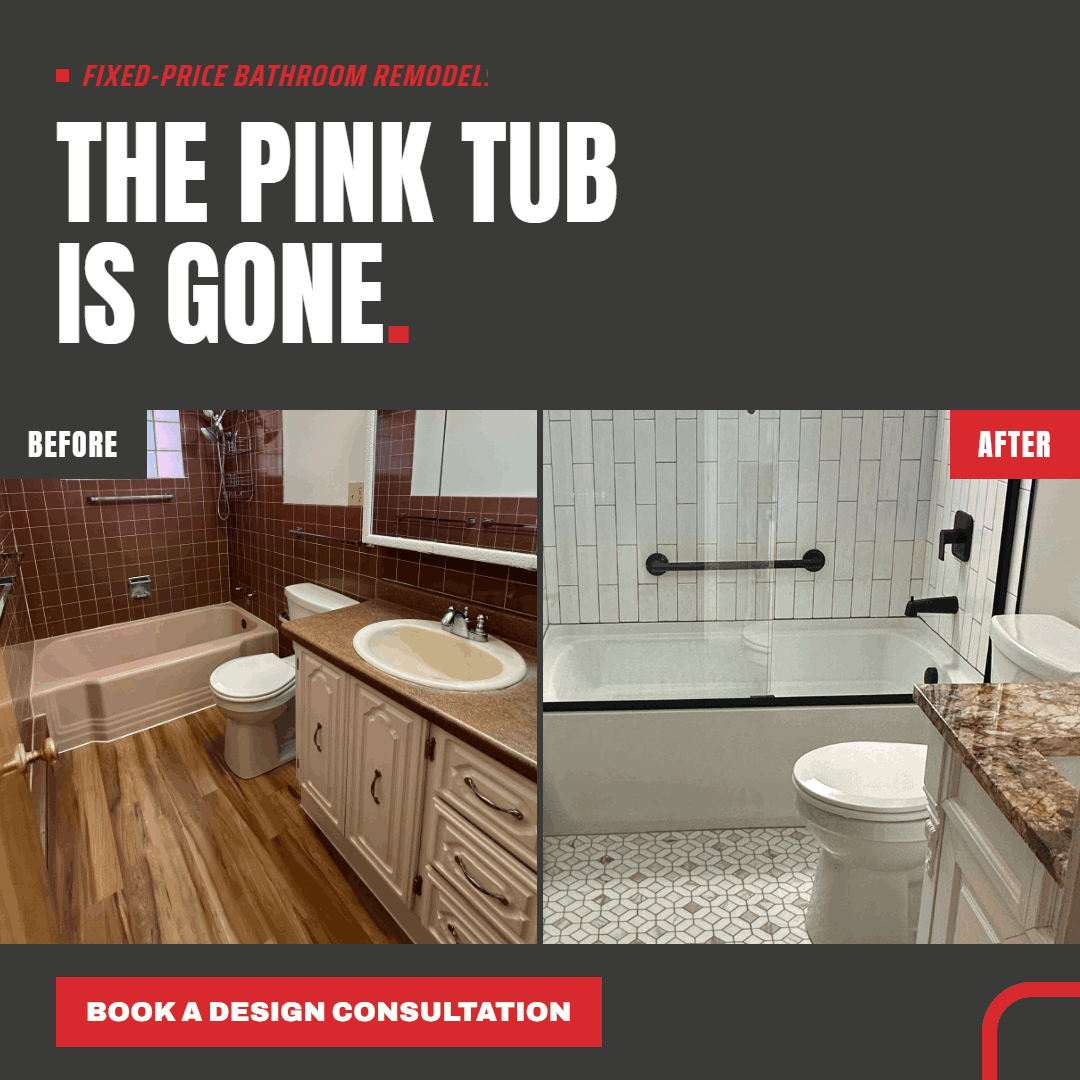 A
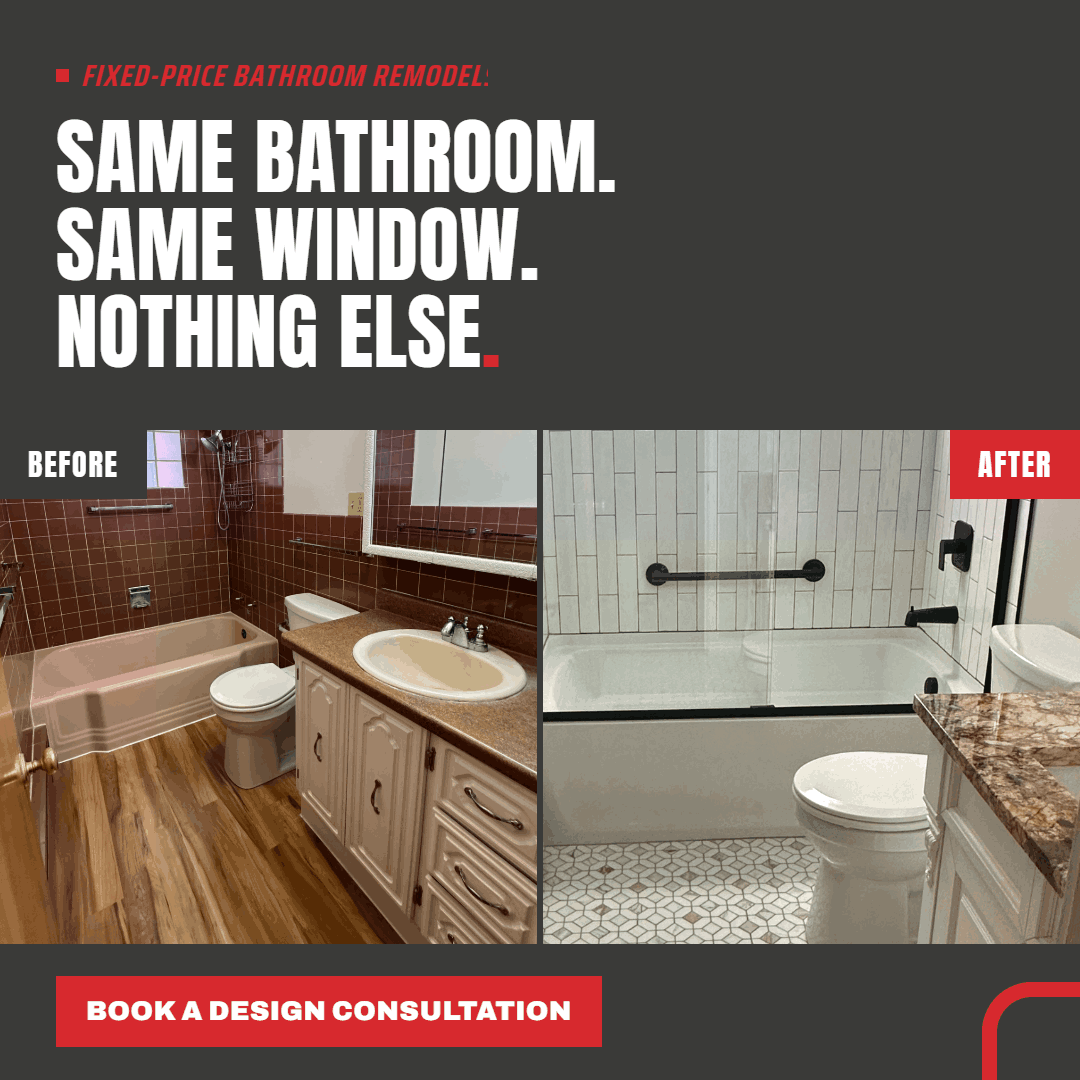 B
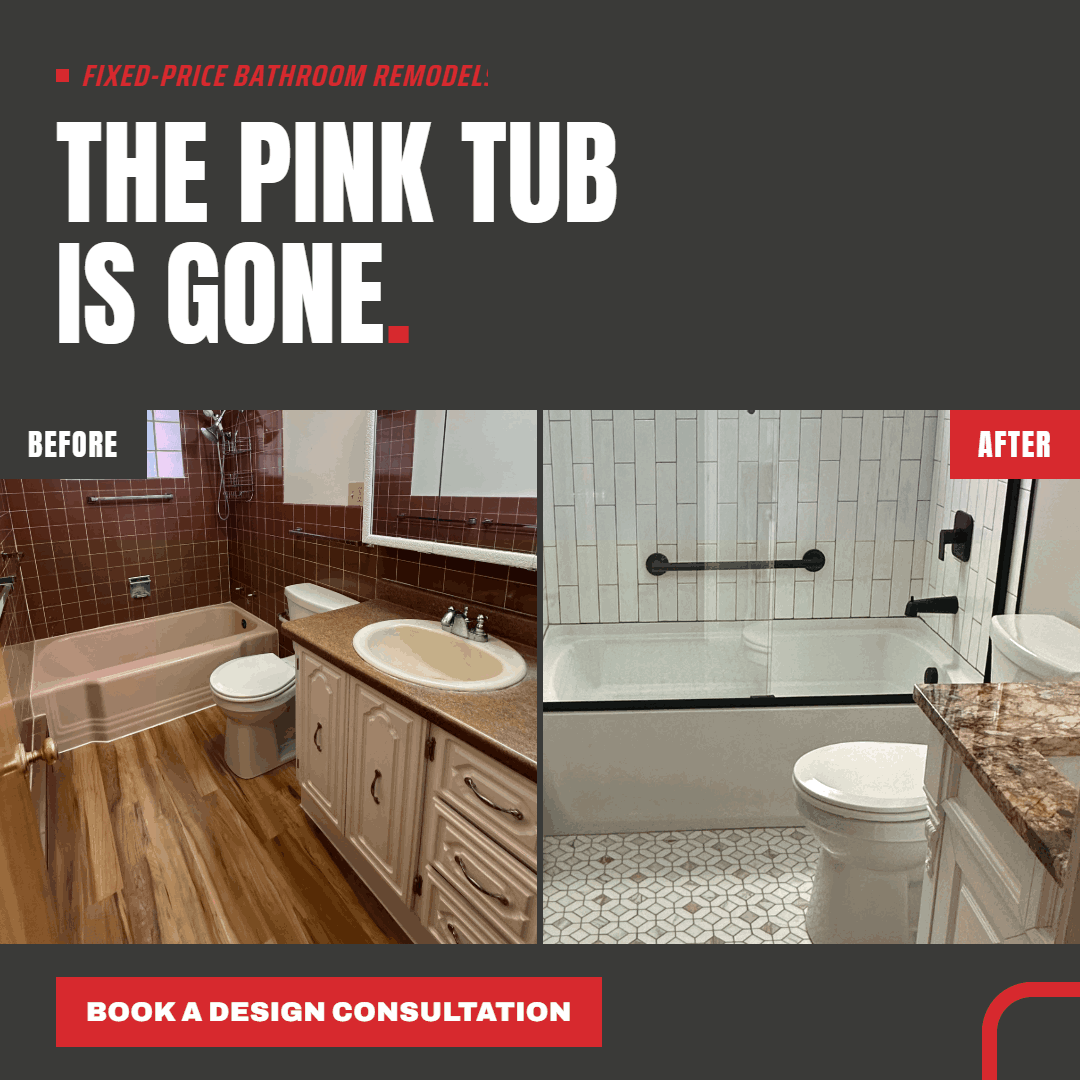
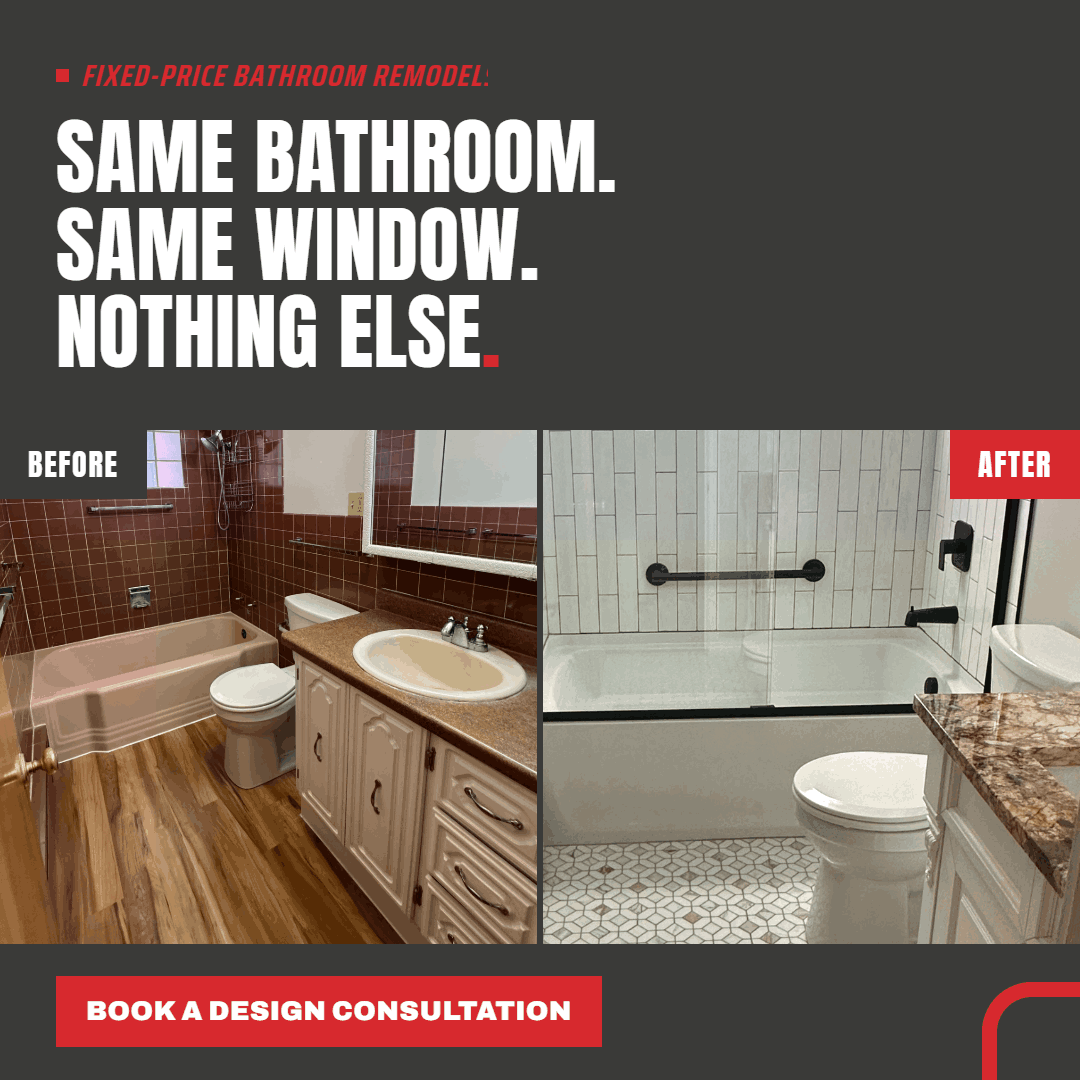
A vs B test: two headlines over the same before-and-after, followed by their variants. The two cheapest-lead winners got the budget.
Results
Figures from Meta Ads Manager, 1 July to 19 October 2026, in USD. The before campaign ran for one month; the after campaign has run for about two and a half months, so the table shows totals and the monthly rate side by side.
| Before (July 2026) | After (Aug to Oct 19, 2026) | Change | |
|---|---|---|---|
| Amount spent | $1,370.60 | $3,404.54 | |
| Spend per month | ~$1,370 | ~$1,310 | about the same |
| Leads | 4 | 61 | 15x total |
| Leads per month | 4 | ~23 | 6x |
| Cost per lead | $342.65 | $55.81 | down 84% |
| Impressions | 56,914 | 52,308 | |
| Link clicks | 835 | 772 | |
| Click-through rate | 1.47% | 1.48% | flat |
| Click to lead | 0.5% | 7.9% | 16x |
| Cost per click | $1.64 | $4.41 | up |
| CPM | $24.08 | $65.09 | up |
The last two rows are the honest part. The new campaign pays more per click and more per thousand impressions, because Meta is now bidding for people likely to submit a form rather than anyone likely to click. It is the right trade: the campaign gets fewer, more expensive clicks and turns one in thirteen into a lead instead of one in two hundred.
Why it worked
The old campaign was built to win clicks. The new one is built to win consultations. Every change points the same way: remove the steps between the ad and the form, give the algorithm a conversion it can actually see, and show finished work instead of a stock image.
For a renovation contractor, the lead form is the whole game. A homeowner scrolling at 9pm will tap a pre-filled form to book a design consultation; they will not load a website and hunt for a contact page. Add two qualifying questions and the consultations that arrive are worth the drive.
The same rebuild applies to any trade or home-services business with a consultation or quote at the front of the sales process:
Ready to see what your ad account is leaving on the table?
Backpack will review your current campaigns and show you where the leads are.
Book a call